
[US Macro & USD IG Overview] Range Bound
US Macro, USD IG & KP Overview

Until the next month indicators releases, I expect that the market will remain within a range of 3-4 rate cuts this year. Enter UST 2YR long @ 4.65% and 4.73%. Realize gain @ 4.50%.
Solid credit market is expected to continue as long as there remains a perception that the ceiling for Treasury yields is capped.
KHFC 33 is my new recommendation.
The start of February has brought back memories of Jan and Feb of last year.
In 2023, a softish indicator in Jan raised expectations for a Fed pivot, only for Feb to completely shatter those expectations.
Will this surprise in the indicators continue the trend of rising interest rates?
A clear answer will only be available upon reviewing next month's indicators. However, until then, I believe the uptrend in interest rates will be limited.
Last year, following the Feb indicator releases, the tone of the Fed officials shifted drastically to a more hawkish stance. (Governor Bullard mentioned that a 50bp hike should not be ruled out.) In contrast, this time, Fed officials are actively downplaying the market's reaction to high CPI.
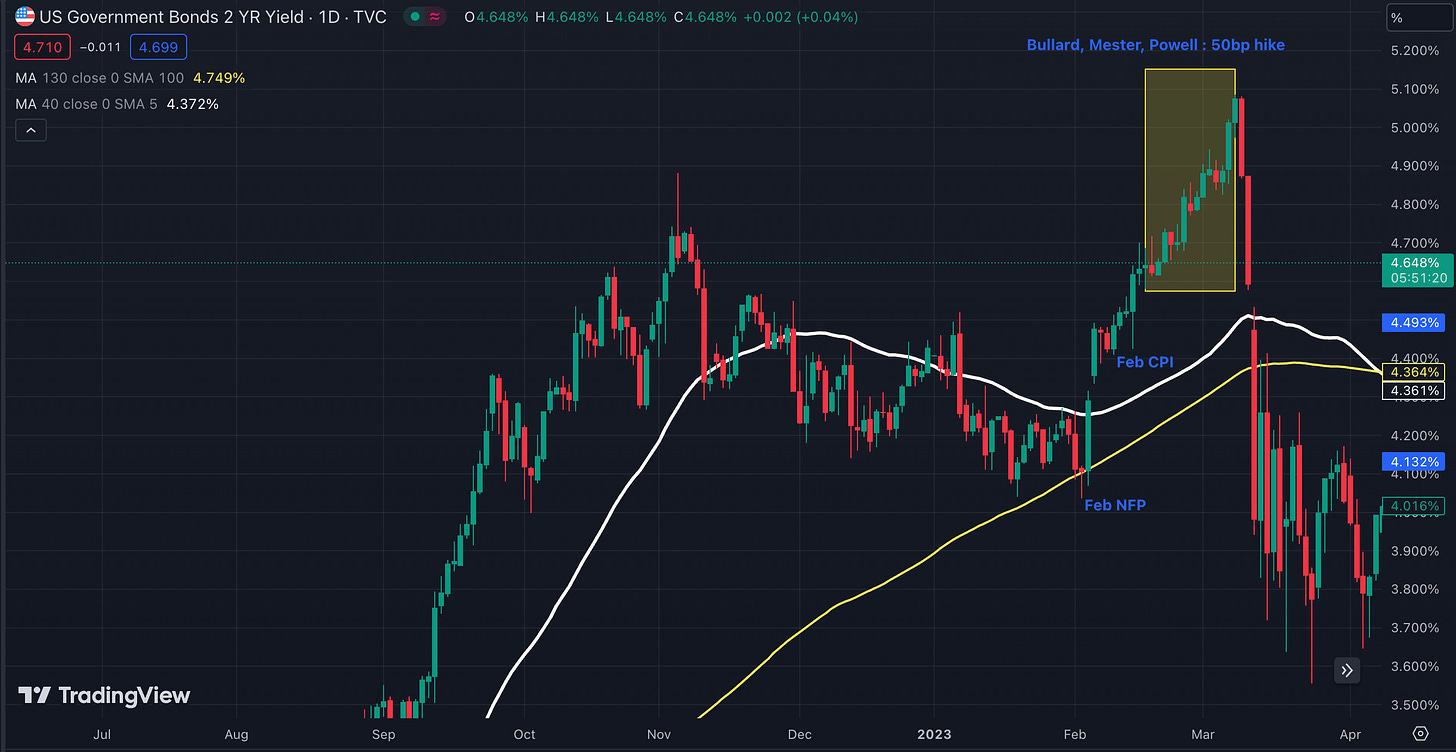
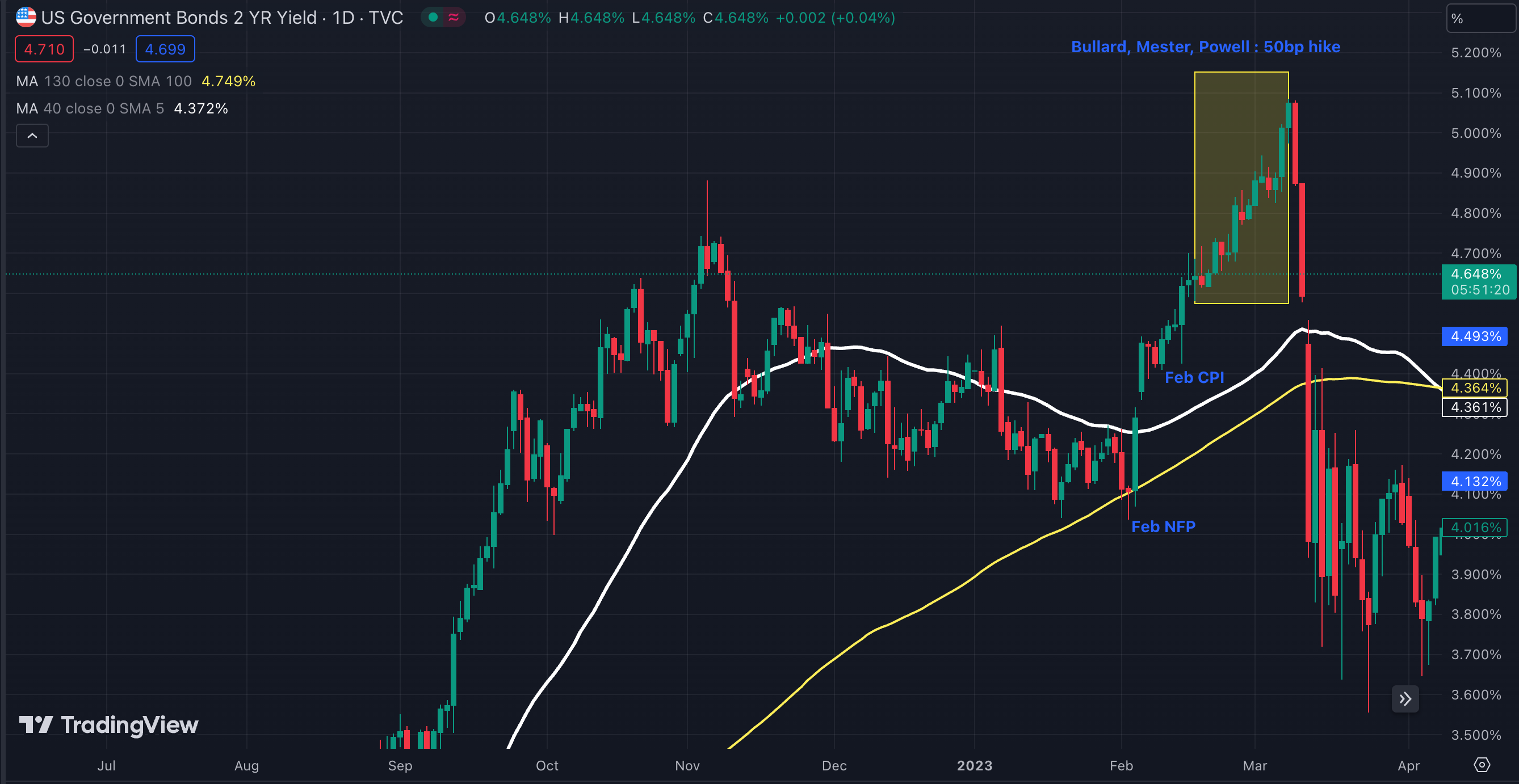
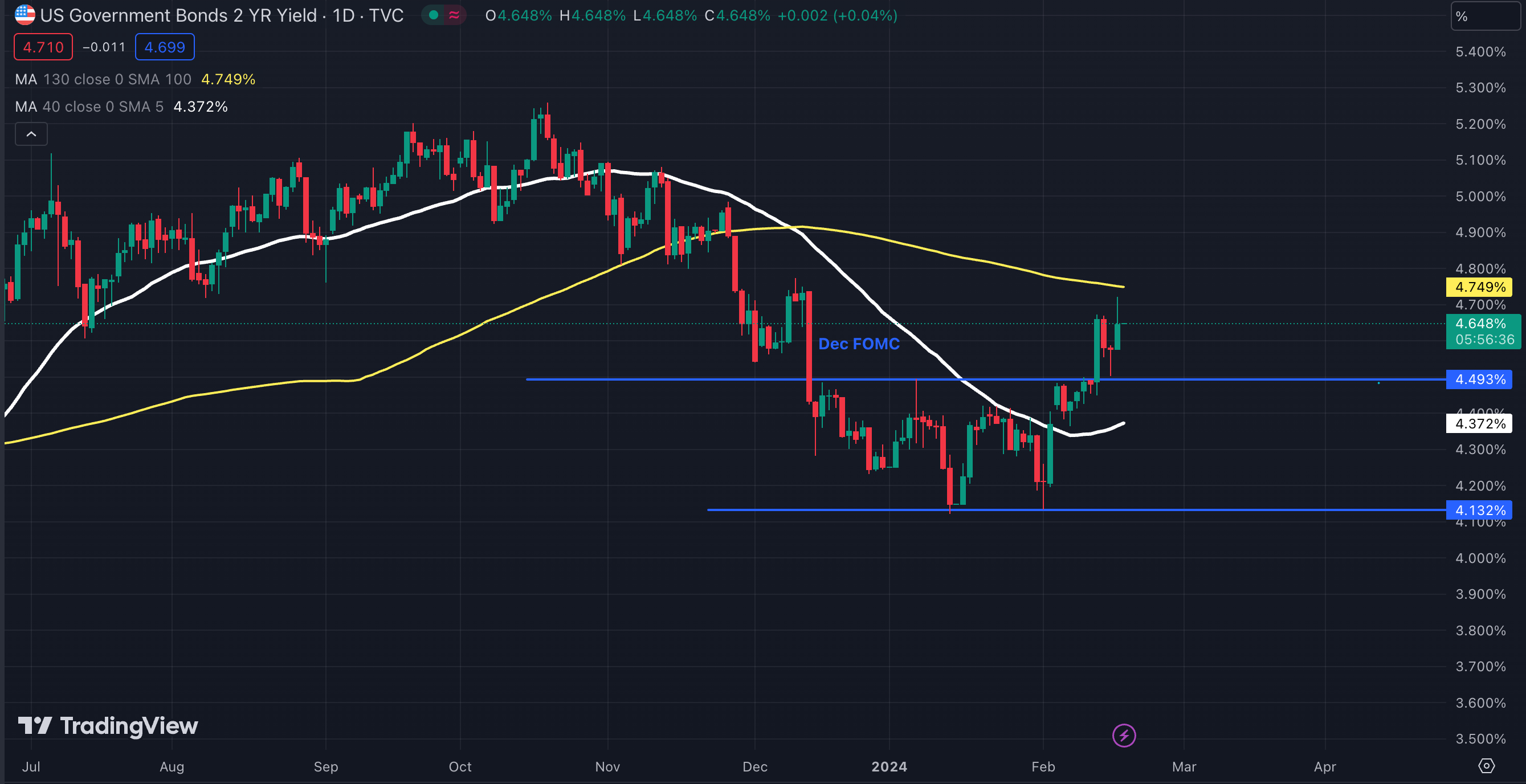
Currently, the levels are back to where they were just before the December FOMC, based on treasury yields, and to the end of November levels, based on TU March futures, before Governor Waller's tone shift. This means prices have returned to levels before dovish comments were made. Without hawkish comments paralleled to October last year, further weakness is hard to imagine.

Such a drastic change in the Fed's stance would require confirmation from one or two more sets of indicators and we just passed major Feb indicators.
Therefore, until the next month's NFP and CPI releases, I expect that the market will remain within a range of 3-4 rate cuts within the year. This aligns with the plan to enter a long position in 2-year U.S. Treasury notes at 4.75% I posted right after the Feb CPI release.
I slightly adjust long position to enter UST 2YR @ 4.65% for the first entry and 4.73% for the second entry. Realize gain @ 4.50%.
Although my view was credit would remain robust despite rising treasury yields, I commented a plan to significantly adjust credit positions if the credit market showed a wide sell-offs (more than 5bps widening) immediately after the Feb CPI.
However, the credit market only showed a slight weakness of 3bps in US banks, with corporates almost maintaining a strength. Moreover, the credit market quickly rebounded the following day. Even on the day of the CPI release, credit was relatively robust, as stocks down approximately -1.5%.
This resilience is attributed to the buying pressure from real money investors who do not hedge treasuries exposures.
These institutions do not trade credit spreads; instead, absolute interest rate levels are the criteria for their purchases.
Thus, a rise in treasury yields means that credits can be bought at more favorable prices, even if spreads remain unchanged.
And it seems the market scenario where the upper limit of interest rates is indeterminable, as seen last year, has passed.
Consequently, the rise in U.S. Treasury yields this year has actually led to stronger buying flows into credit, changing the correlation between rates and spreads to negative (tightening spreads as yields rise).
This trend is expected to continue as long as there is a perception that the ceiling for Treasury yields is capped. Conversely, if the sentiment shifts back to not ruling out further hikes as seen last year, the correlation will revert to positive.
Until the next indicator week, the strength in credit is expected to persist.
KHFC 33 is my new recommendation. Despite being a AA-rated Quasi Sovereign, it offers a spread of about 90bps. This spread is over 20bps higher compared to its peers within the SSA sector, such as EIBKOR and KDB. Outside the SSA sector, a 10-year issue that offers a 90bps spread is HNDA, which is rated one notch lower at A and, and considering the difference between Quasi and Corp, KHFC 33 appears relatively cheap. The liquidity premium is expected to decrease gradually as KHFC has started issuing regularly since 2022, increasing its mark in the KP market.